


Shady gardens don’t have to be dull or empty. While many popular plants demand full sun, an incredible variety of stunning flowers, lush foliage plants, and even edible crops thrive in shade. Whether you’re dealing with a north-facing yard, tree-canopied areas, or a shaded balcony, these shade-loving plants will transform your dark corners into beautiful garden spaces.

Understanding Shade Types
Not all shade is equal, and knowing what type of shade you have helps you choose the right plants. Light shade receives 3-5 hours of direct sun, usually filtered through a high tree canopy. Partial shade gets 2-3 hours of direct sun, typically in the morning or late afternoon. Full shade receives less than 2 hours of direct sun but still gets ambient light. Dense shade is found under evergreen trees or between closely spaced buildings where almost no direct light penetrates.
Most shade-loving plants thrive in light to partial shade. Full shade limits your options but still supports many beautiful foliage plants. Dense shade is the most challenging — focus on tough groundcovers and hardy ferns for these areas.
Best Flowering Plants for Shade
Astilbe produces feathery plumes in pink, red, white, and purple that light up shaded gardens from early to midsummer. These clump-forming perennials thrive in moist, humus-rich soil and add beautiful texture even when not blooming. Impatiens are the classic shade annual, smothering themselves in flowers from spring through frost in every color imaginable. They’re perfect for containers, borders, and mass plantings under trees.
Bleeding Heart (Dicentra) produces distinctive heart-shaped flowers that dangle from arching stems in spring. They prefer cool, shaded conditions and go dormant in summer heat. Foxglove creates dramatic vertical spikes of tubular flowers that hummingbirds adore, thriving in partial to full shade. Hydrangeas are shade garden royalty — their massive flower heads in blue, pink, white, and purple bloom for months with minimal direct sun.
Top Foliage Plants for Shade
Hostas are the undisputed kings of shade gardening. With thousands of varieties ranging from 3-inch miniatures to 4-foot giants, they offer incredible diversity in leaf color, size, shape, and texture. Blue-green, chartreuse, variegated, and pure gold varieties create stunning combinations. Hostas are tough perennials that return bigger and better each year, requiring virtually no care once established.
Ferns bring an elegance to shade gardens that few other plants can match. Japanese painted fern features silver and purple fronds that shimmer in dappled light. Maidenhair fern has delicate, fan-shaped leaflets on wiry black stems. Christmas fern stays evergreen through winter, providing year-round structure. Coral Bells (Heuchera) offer foliage in an astonishing range of colors — purple, lime, copper, silver, and nearly black — creating dramatic contrasts in shaded borders.
Shade-Loving Groundcovers
Groundcovers solve the age-old problem of bare soil under trees where grass refuses to grow. Ajuga (Bugleweed) spreads quickly, forming a dense mat of bronze or purple foliage topped with blue flower spikes in spring. Sweet Woodruff covers the ground with whorls of fragrant leaves and tiny white flowers — it’s also the traditional flavoring for May wine. Creeping Jenny trails golden-green foliage that brightens even the deepest shade.
Vinca minor (Periwinkle) is one of the toughest shade groundcovers, covering slopes and problem areas with glossy evergreen foliage and violet-blue flowers. Wild ginger spreads slowly but steadily, forming a beautiful carpet of heart-shaped leaves with an aromatic root system. Pachysandra creates dense, evergreen coverage under trees where nothing else will grow.
Edible Plants That Grow in Shade
Shade gardeners aren’t limited to ornamentals — several delicious crops actually prefer cooler, shadier conditions. Lettuce and salad greens bolt quickly in full sun but produce tender, sweet leaves for weeks in partial shade. Spinach stays productive longer in shade, especially during warm weather. Kale tolerates significant shade and actually develops sweeter flavor without intense sun stress.
Herbs like mint, parsley, cilantro, and chives grow beautifully with just 3-4 hours of sun. Rhubarb thrives in partial shade and produces for decades once established. Alpine strawberries produce small, intensely flavored berries in shaded conditions that would cause regular strawberries to fail. Mushrooms, of course, are the ultimate shade crop — growing kits for shiitake and oyster mushrooms work perfectly in dark areas.
Shade-Loving Shrubs
Azaleas and rhododendrons are classic shade-loving shrubs, producing spectacular blooms in spring. They require acidic soil (pH 4.5-6.0) and consistent moisture but reward you with dazzling color year after year. Mountain laurel produces clusters of intricate, uniquely shaped flowers in late spring and is one of the most beautiful native shade shrubs.
Japanese Pieris offers year-round interest with cascading clusters of bell-shaped flowers, colorful new growth, and evergreen foliage. Camellia provides elegant blooms during fall and winter when few other plants flower. Holly varieties offer glossy evergreen leaves and bright red berries that provide winter interest and bird food in shaded woodland settings.
Design Tips for Shade Gardens
Use light-colored and variegated plants to brighten shaded areas. White flowers, chartreuse foliage, and silver-leaved plants reflect available light and create the illusion of brightness. Avoid too many dark-leaved plants in deep shade — they’ll disappear visually. Create layers with tall ferns or shrubs in the back, medium hostas and heuchera in the middle, and low groundcovers in front.
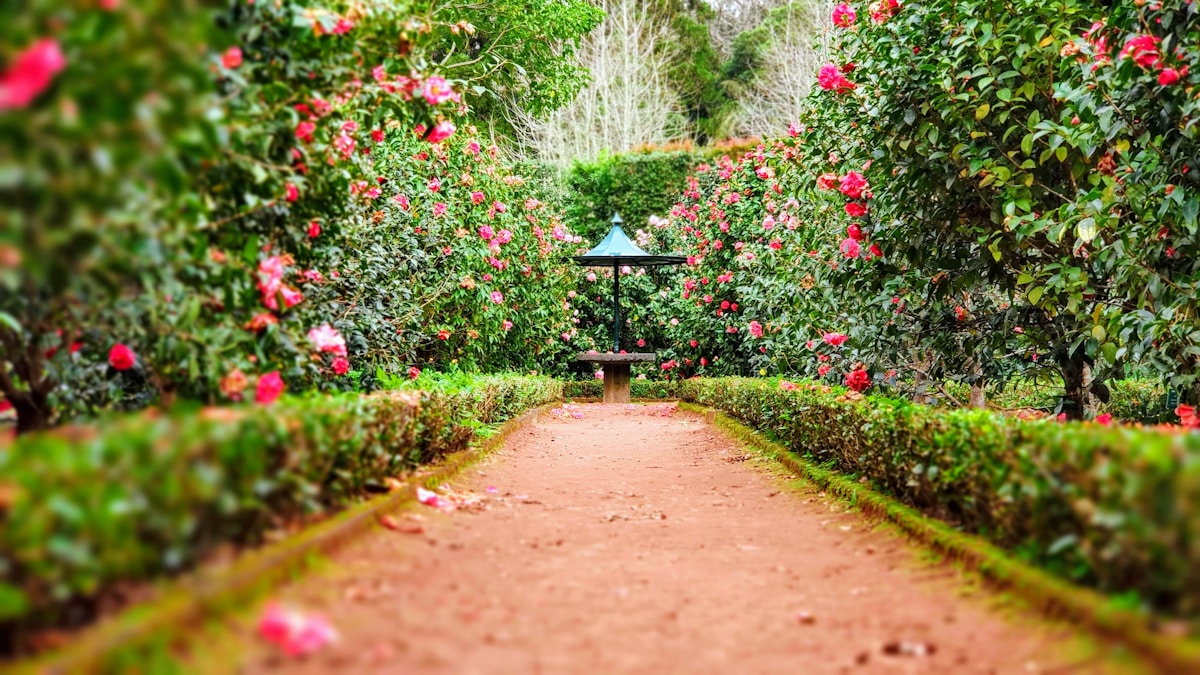
Add focal points like a birdbath, bench, or stone pathway to give the eye something to rest on. Mirror-like gazing balls and light-colored mulch also help brighten shaded spaces. Consider uplighting key plants for evening drama — shade gardens often look even more magical after dark with strategic landscape lighting.
Caring for Shade Garden Plants
Shade garden soil tends to be moisture-retentive, so be careful not to overwater. Many shade plants prefer consistently moist but never waterlogged conditions. Add organic mulch (shredded bark or leaf mold) to maintain soil moisture and gradually improve soil structure. Since shade plants compete with tree roots for water and nutrients, supplemental watering during dry spells and regular fertilizing are important.
Slugs and snails are the primary pests in shade gardens — they thrive in the cool, moist conditions. Use iron phosphate bait, copper barriers, or beer traps to control them. Remove fallen leaves and debris that provide hiding spots. Keep an eye out for powdery mildew, which favors the reduced air circulation common in shaded areas.
Embrace the Shade
Shade gardens offer a unique beauty that sunny gardens simply can’t replicate — the lush textures, the cool retreat from summer heat, the peaceful atmosphere created by towering trees and dappled light. Instead of fighting your shade, embrace it. With the right plant choices, your shaded areas can become the most beautiful and inviting spaces in your entire garden.