

In This Article
Introduction
Zucchini is one of the most productive vegetables you can grow in your garden. A single plant can produce 6 to 10 pounds of squash over the growing season, making it perfect for beginners who want impressive results with minimal effort. This warm-season crop thrives in summer heat and rewards attentive gardeners with a continuous harvest from midsummer through fall.
Whether you have a large backyard plot or a sunny patio with containers, zucchini adapts well to various growing situations. The key is providing enough sunlight, consistent moisture, and good soil. Get these three things right and you will have more zucchini than you know what to do with.
Choosing the Right Zucchini Varieties
Zucchini comes in many shapes, sizes, and colors beyond the classic dark green. Choosing the right variety for your space and preferences makes all the difference in your growing experience.
- Black Beauty — The classic dark green zucchini with excellent flavor and high yields. Matures in 50 days.
- Costata Romanesco — An Italian heirloom with ribbed skin and nutty flavor. Fewer fruits but superior taste.
- Golden Zucchini — Bright yellow skin makes it easy to spot among foliage for timely harvesting.
- Patio Star — Compact bush variety perfect for container growing on patios and balconies.
- Tromboncino — A climbing variety that grows on trellises, saving ground space in small gardens.
Planting Zucchini
Zucchini is a warm-season crop that should be planted after all danger of frost has passed and soil temperatures reach at least 60 degrees Fahrenheit. In most regions, this means late May through June.
Direct sow seeds 1 inch deep in hills or rows, spacing plants 3 to 4 feet apart. Zucchini plants get large and need room for air circulation to prevent disease. If starting seeds indoors, plant 2 to 3 weeks before your last frost date and transplant carefully since zucchini roots are sensitive to disturbance.
Prepare your soil by working in 2 to 3 inches of compost before planting. Zucchini is a heavy feeder that thrives in rich, well-drained soil with a pH between 6.0 and 7.5.
Pro Tip: Plant zucchini seeds on small mounds 3 to 4 inches high. This improves drainage, warms the soil faster, and helps prevent stem rot at the plant base.
Growing and Care
Once established, zucchini grows rapidly and requires consistent attention to water, feeding, and pollination.
Watering: Zucchini needs 1 to 2 inches of water per week delivered at the base of the plant. Drip irrigation keeps leaves dry and reduces fungal disease. Water deeply but less frequently to encourage deep root development.
Feeding: Apply a balanced fertilizer every 3 to 4 weeks during the growing season. Side-dress with compost when plants begin flowering to support fruit production. Avoid excess nitrogen which promotes leaf growth at the expense of fruit.
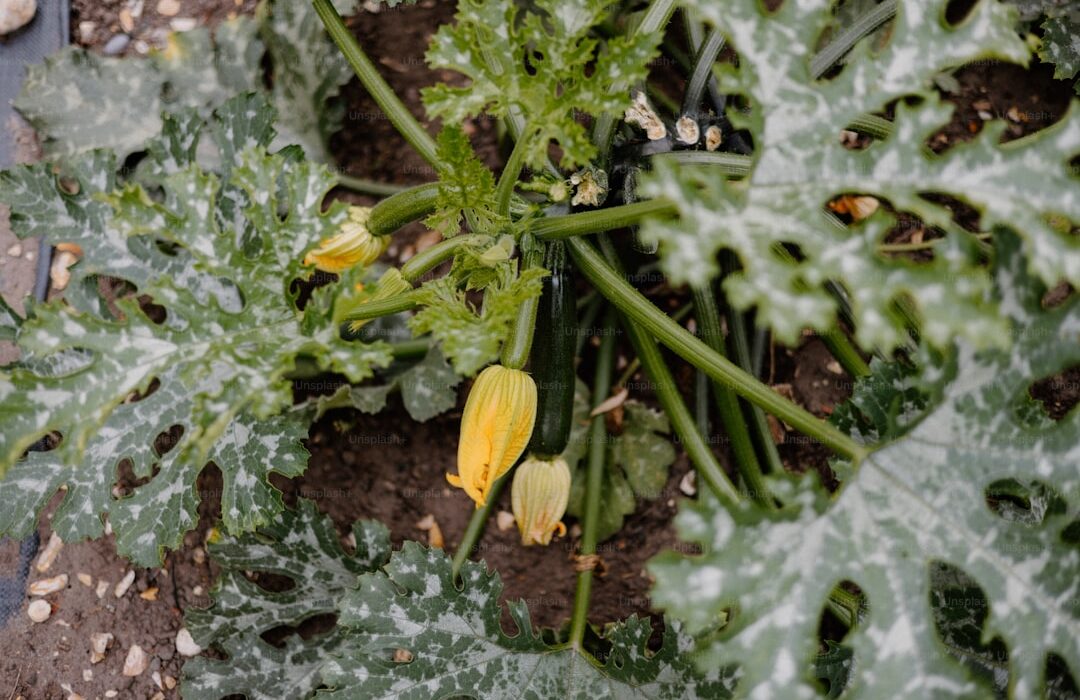
Pollination: Zucchini produces separate male and female flowers. Male flowers appear first on thin stems while female flowers have a tiny fruit at the base. Bees handle pollination naturally, but you can hand-pollinate by transferring pollen with a small brush if needed.
Mulching: Apply 2 to 3 inches of organic mulch around plants to conserve moisture, suppress weeds, and keep fruit clean. Keep mulch a few inches from the stem to prevent rot.
Pest and Disease Management
Zucchini faces several common pest and disease challenges that are manageable with early detection and organic methods.
- Squash vine borers — Moth larvae bore into stems causing sudden wilting. Wrap stem bases with aluminum foil as a barrier. Remove larvae if found by slitting the stem carefully.
- Squash bugs — Check under leaves for bronze egg clusters and remove them. Hand-pick adults in early morning. Neem oil spray is an effective deterrent.
- Powdery mildew — White coating on leaves is common in late summer. Improve air circulation and apply baking soda spray (1 tablespoon per gallon) preventively.
- Blossom end rot — Caused by inconsistent watering and calcium deficiency. Maintain even moisture and add crushed eggshells to the soil.
Harvesting
Harvest zucchini when fruits are 6 to 8 inches long for the best flavor and texture. At this size, the skin is tender, seeds are small, and flavor peaks. Check plants daily during peak production since zucchini can double in size in 48 hours.
Use a sharp knife or pruners to cut fruit from the plant, leaving about an inch of stem. Regular harvesting encourages continued production throughout the season.
Key Takeaway: Zucchini is a beginner-friendly, high-yield vegetable that thrives in warm weather with consistent water and rich soil. Plant after last frost, harvest at 6 to 8 inches, and pick frequently to keep production going all season long.
Frequently Asked Questions
How many zucchini plants do I need for a family?
Two to three healthy plants are plenty for a family of four. Each plant produces 6 to 10 pounds over the season.
Why are my zucchini flowers falling off?
The first flowers are typically all male and drop naturally. Once female flowers appear, pollination can occur. If female flowers drop too, try hand-pollinating.
Can I grow zucchini in containers?
Yes. Choose a compact variety like Patio Star and use a container at least 5 gallons with good drainage. Container zucchini needs more frequent watering and feeding.