

![Featured image showing a collection of essential garden tools neatly arranged on a potting bench with seedlings in foreground]
Table of Contents
Starting Your Gardening Journey
Walking into a garden center as a new gardener can feel overwhelming. Row upon row of tools in every shape and size—how do you know what you actually need versus what’s just marketing hype?
We’ve been there. When our editor first started gardening, she bought every gadget that promised to make growing easier. Years later, most of those “essentials” gather dust in the shed while a core set of reliable tools gets used daily.
This guide cuts through the noise. We’ve compiled the true essentials—the tools that will serve you from your first container tomato through years of expanding garden adventures. Whether you’re planning a small balcony garden or tackling your first in-ground plot, this checklist has you covered.
The Philosophy: Buy Once, Buy Right
Before diving into the list, let’s talk strategy. Gardening tools follow the classic quality triangle: you can have two of fast, cheap, and good. We recommend investing in quality for tools you’ll use regularly. A $50 shovel that lasts 20 years costs $2.50 per year—cheaper than replacing a $15 shovel every two years.
That said, you don’t need to buy everything at once. Start with the basics, add tools as your skills and garden grow, and always buy the best quality you can afford.
The Complete Beginner’s Tool Checklist
Category 1: Hand Tools (The Daily Essentials)
These are your most-used tools—the ones that should live in a holster on your belt or in a caddy you carry everywhere.
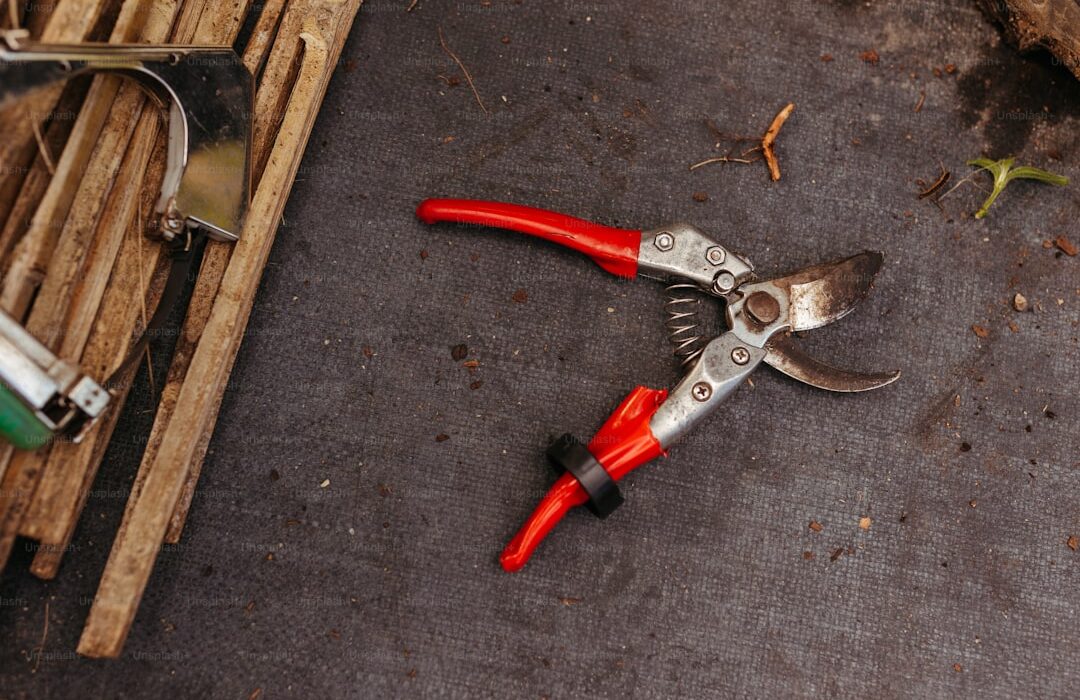
#### 1. Pruning Shears (Hand Pruners)
![Image: Various hand pruners showing bypass vs anvil types]
Why you need it: From harvesting herbs to deadheading flowers to cutting twine, pruning shears are the most-used tool in most gardens. What to look for:- Bypass style for clean cuts on live plants
- Comfortable grip that fits your hand size
- Quality steel blade (stamped steel is fine for beginners)
- Safety lock mechanism
#### 2. Trowel
![Image: Different trowel types showing traditional and ergonomic designs]
Why you need it: Digging planting holes, transplanting seedlings, mixing soil amendments—the trowel is your precision digging tool. What to look for:- Stainless steel or carbon steel blade
- Comfortable, non-slip handle
- Depth markings (helpful but not essential)
- One-piece construction (handle won’t separate from blade)
#### 3. Hand Fork (Cultivator)
![Image: Hand fork showing three-tine design and ergonomic handle]
Why you need it: Breaking up soil crust, loosening weeds, aerating around plants—this three-tined tool does what fingers can’t. What to look for:- Sturdy tines that won’t bend
- Comfortable grip
- Appropriate size for your hand
#### 4. Garden Knife (Hori Hori)
![Image: Hori Hori knife showing serrated edge, straight edge, and measurement markings]
Why you need it: This Japanese tool is a trowel, knife, saw, and measuring device in one. Dig, cut, divide perennials, open bags, remove weeds—it does it all. What to look for:- Stainless steel blade (rust resistant)
- One serrated edge, one straight edge
- Measurement markings on blade
- Full tang construction (blade extends through handle)
- Sheath for safety
#### 5. Weeding Tool
![Image: Different weeding tools including dandelion digger and Cape Cod weeder]
Why you need it: Pulling weeds by hand often leaves roots behind. A proper weeding tool gets the entire plant, reducing regrowth. Options to consider:- Dandelion digger: Forked tip for prying out deep taproots
- Cape Cod weeder: Sharp blade for slicing weeds at soil line
- Hand hoe: Small hoe head for scraping surface weeds
The CobraHead’s unique curved head and sharp blade make weeding almost satisfying. It digs, pries, and slices with equal effectiveness.
Category 2: Long-Handled Tools (Power and Reach)
These tools extend your reach and multiply your power for bigger jobs.
#### 6. Round-Point Shovel
![Image: Round-point shovel showing D-handle and long-handled options]
Why you need it: Digging holes, moving soil, turning compost, edging beds—the round-point shovel is the workhorse of garden tools. What to look for:- 14-gauge or thicker steel blade
- Hardwood or fiberglass handle
- Forward-turned step for foot pressure
- Socket or strap connection (not just a rivet)
#### 7. Garden Fork (Digging Fork)
![Image: Garden fork showing four sturdy tines and D-handle]
Why you need it: When soil is too compacted for a shovel, the fork penetrates. Essential for turning beds, harvesting potatoes, and loosening clay soil. What to look for:- Four square tines (not flat)
- 10-inch minimum tine length
- Strong connection between head and handle
- Comfortable grip (D-handle or straight)
#### 8. Hoe
![Image: Different hoe types showing draw hoe, scuffle hoe, and Dutch hoe]
Why you need it: Weeding and cultivating soil without bending over. The right hoe makes quick work of weed management. Types to consider:- Draw hoe: Traditional chopping motion, good for heavy soil
- Scuffle hoe (Hula hoe): Back-and-forth motion, excellent for established beds
- Dutch hoe: Push-pull motion, precise weeding
The scuffle hoe’s action is easier on the back and more efficient than chopping hoes once you get the technique down.
#### 9. Rake
![Image: Bow rake showing 14-tine design and strong handle]
Why you need it: Soil preparation, spreading mulch, removing debris, leveling beds—no other tool does what a rake does. What to look for:- 14-16 tines for good coverage
- Strong connection to handle
- Hardwood handle for shock absorption
Category 3: Cutting Tools
#### 10. Loppers
![Image: Bypass loppers showing long handles and ratchet mechanism]
Why you need it: When branches are too thick for hand pruners but too small for a saw, loppers provide the leverage you need. What to look for:- Bypass blade for clean cuts
- 28-32 inch handles for good leverage
- Gear or ratchet mechanism for easier cutting
- Replaceable blade
#### 11. Pruning Saw
![Image: Folding pruning saw showing aggressive teeth and safety lock]
Why you need it: For branches over 1.5 inches, a saw is safer and more effective than loppers. Essential for pruning trees and large shrubs. What to look for:- Folding design for safety and portability
- Aggressive tooth pattern for fast cutting
- Comfortable handle
- Replacement blades available
The Silky cuts on the pull stroke with incredible efficiency. It makes pruning large branches almost effortless.
#### 12. Hedge Shears
![Image: Traditional hedge shears showing wavy blade and comfortable grips]
Why you need it: Only needed if you have hedges or formal topiary to maintain. For general pruning, stick with hand pruners. What to look for:- Wavy blade (holds stems while cutting)
- Shock-absorbing bumpers
- Comfortable grip
- Replaceable blade
Category 4: Watering Equipment
#### 13. Watering Can
![Image: Metal and plastic watering cans showing rose attachment and long spout]
Why you need it: Gentle watering for seedlings, containers, and targeted irrigation where hoses can’t reach. What to look for:- 2-gallon capacity (larger gets too heavy)
- Removable rose (sprinkler head)
- Long spout for reach
- Balanced handle design
#### 14. Garden Hose
![Image: Quality garden hose showing brass fittings and kink-resistant design]
Why you need it: Unless you enjoy carrying a watering can hundreds of times, a hose is essential for any garden larger than a few containers. What to look for:- 5/8-inch diameter for good flow
- 50-100 foot length (measure your needs)
- Brass fittings (not plastic)
- Kink-resistant construction
- Drinking water safe (if used for edibles)
#### 15. Spray Nozzle
![Image: Adjustable spray nozzle showing multiple patterns and ergonomic grip]
Why you need it: Different plants and tasks need different water patterns—from gentle mist for seedlings to strong jet for cleaning. What to look for:- Multiple spray patterns (8+ settings)
- Thumb control (no squeezing required)
- Metal construction (plastic breaks)
- Non-slip grip
Category 5: Support and Protection
#### 16. Kneeling Pad or Garden Kneeler
![Image: Garden kneeler showing foam padding and handles for assistance]
Why you need it: Your knees will thank you. Gardening involves a lot of kneeling, and hard ground takes its toll. Options:- Simple foam pad: Portable, inexpensive, adequate protection
- Garden kneeler: Combination kneeler/seat with handles for assistance standing
The foldable design converts from kneeler to seat, and the handles help you stand up—especially valuable as we age.
#### 17. Garden Gloves
![Image: Different garden glove types showing nitrile-coated, leather, and wrist-protection styles]
Why you need it: Protect your hands from thorns, blisters, chemicals, and dirt. Good gloves improve grip and reduce fatigue. Types to consider:- Nitrile-coated: Dexterity for detailed work
- Leather: Durability for heavy tasks
- Gauntlet-style: Rose pruning and thorny plants
- Daily use: Atlas Nitrile Touch Gloves ($6-8)
- Heavy duty: Wells Lamont Leather Work Gloves ($12-18)
- Rose pruning: Exemplary Gardens Rose Gloves ($20-25)
#### 18. Wheelbarrow or Garden Cart
![Image: Traditional wheelbarrow and utility cart showing different capacities]
Why you need it: Move soil, compost, mulch, plants, and debris without destroying your back. Essential for any garden larger than a few beds. What to look for:- 6 cubic foot capacity minimum
- Single wheel (maneuverable) or two-wheel (stable)
- Steel or poly tray (poly is lighter, steel more durable)
- Pneumatic tire for shock absorption
Category 6: Organization and Maintenance
#### 19. Tool Storage
![Image: Tool rack showing organized long-handled tools and hand tool caddy]
Why you need it: Tools left on the ground get damaged, create tripping hazards, and mysteriously disappear into the garden. Options:- Wall-mounted rack: Best for sheds and garages
- Tool caddy: Portable organization for hand tools
- Bucket organizer: Inexpensive DIY solution
#### 20. Sharpening Tools
![Image: Sharpening stone and file showing proper angle guide]
Why you need it: Sharp tools work better, require less effort, and make cleaner cuts that heal faster. Dull tools are dangerous tools. Essentials:- Diamond sharpening file: For quick edge restoration
- Whetstone: For precise sharpening
- Mill file: For sharpening shovels and hoes
Tool Shopping Strategy by Budget
Starting Budget: Under $100
Priority purchases: 1. Hand pruners ($15-20) 2. Trowel ($8-12) 3. Weeding tool ($10-15) 4. Garden gloves ($8-12) 5. Basic shovel ($25-35) 6. Kneeling pad ($10-15) Total: ~$76-109Moderate Budget: $200-300
Add to the above:- Hori hori knife ($20-25)
- Garden fork ($35-45)
- Hoe ($25-35)
- Rake ($25-35)
- Loppers ($35-45)
- Watering can ($15-20)
- Garden hose + nozzle ($40-60)
- Better tool storage ($25-35)
Complete Setup: $500-700
Add premium versions and:- Pruning saw ($45-55)
- Wheelbarrow ($60-80)
- Garden kneeler ($35-45)
- Specialized gloves ($40-60 total)
- Sharpening kit ($45-55)
- Premium versions of core tools
Tool Care: Making Your Investment Last
Daily Maintenance
- Clean tools before storing
- Wipe blades with oily rag to prevent rust
- Store out of weather
Seasonal Maintenance
- Sharpen all cutting tools
- Sand and oil wooden handles
- Inspect for damage
- Touch up paint on metal to prevent rust
Long-Term Care
- Replace worn handles rather than whole tools
- Keep replacement springs for pruners on hand
- Store in dry location with good air circulation
Frequently Asked Questions
Should I buy a tool set or individual tools?
Individual tools, always. Tool sets often include items you’ll never use while lacking essentials. Buy each tool based on your specific needs, and invest in quality for items you’ll use regularly.Are stainless steel tools worth the extra cost?
For hand tools used frequently, yes—the rust resistance and ease of cleaning justify the modest premium. For long-handled tools stored in sheds, carbon steel with proper maintenance is fine.
How do I know if a tool is good quality?
Check these indicators:- Weight: Quality tools feel substantial but balanced
- Connections: Look for forged or welded joints, not just rivets
- Materials: Hardwood or fiberglass handles, high-carbon or stainless steel blades
- Warranty: Good tools come with guarantees
Can I start gardening with just a few tools?
Absolutely! Many experienced gardeners started with just a hand trowel and pruning shears. Add tools as specific needs arise—you’ll appreciate each new addition more.
Should I buy long-handled or short-handled versions?
Your height matters. If you’re under 5’6″, look for “ladies’” or “petite” versions with shorter handles. Using tools that are too long causes back strain.What’s the most important tool for a beginner?
Pruning shears and a trowel are used most frequently. If budget allows, add a hori hori knife—the versatility is unmatched.
How do I store tools if I don’t have a shed?
A deck box, garage corner, or even a large plastic bin with holes for ventilation works. The key is keeping tools dry and organized. A bucket with sand mixed with mineral oil makes an excellent tool cleaner and storage solution.
Your Printable Checklist
[ ] Hand Tools- [ ] Pruning shears (bypass style)
- [ ] Trowel
- [ ] Hand fork/cultivator
- [ ] Garden knife (hori hori)
- [ ] Weeding tool
- [ ] Round-point shovel
- [ ] Garden fork
- [ ] Hoe
- [ ] Rake
- [ ] Loppers
- [ ] Pruning saw
- [ ] Hedge shears (if needed)
- [ ] Watering can
- [ ] Garden hose
- [ ] Spray nozzle
- [ ] Kneeling pad or garden kneeler
- [ ] Garden gloves (2-3 pairs)
- [ ] Wheelbarrow or cart
- [ ] Tool storage solution
- [ ] Sharpening tools
Final Thoughts
Building your tool collection is part of the gardening journey. Start with what you need for immediate tasks, add tools as your skills and garden expand, and don’t be afraid to upgrade as you discover what works best for you.
Remember: the best tool is the one that gets you outside, hands in the soil, connecting with your plants. Everything else is just details.
What tools have become indispensable in your garden? Share your must-haves in the comments below! Related Articles:- Best Pruning Shears: Top 10 Reviewed and Compared
- Tool Maintenance: Keeping Your Garden Gear in Top Shape
- Container Gardening Essentials
- Starting Your First Vegetable Garden
Frequently Asked Questions
How do I maintain my garden tools?
Clean tools after each use by wiping off soil and drying them completely. Sharpen cutting edges 2 to 3 times per season using a flat file or sharpening stone. Apply a light coat of linseed oil to wooden handles annually and a thin layer of WD-40 or machine oil to metal parts to prevent rust.
Is it worth investing in expensive garden tools?
Quality tools with forged steel heads and hardwood handles typically last 10 to 20 years versus 1 to 3 years for budget alternatives. Over time, a fifty-dollar spade that lasts fifteen years costs far less than replacing a fifteen-dollar version every other year. Start with the tools you use most frequently.
What are the essential tools every gardener needs?
Start with five core tools: a spade or garden fork for digging, hand pruners for trimming, a garden rake for leveling, a hoe for weeding, and a watering can or hose. These five tools handle 90 percent of garden tasks. Add specialty tools only as specific needs arise.