

In This Article
Introduction
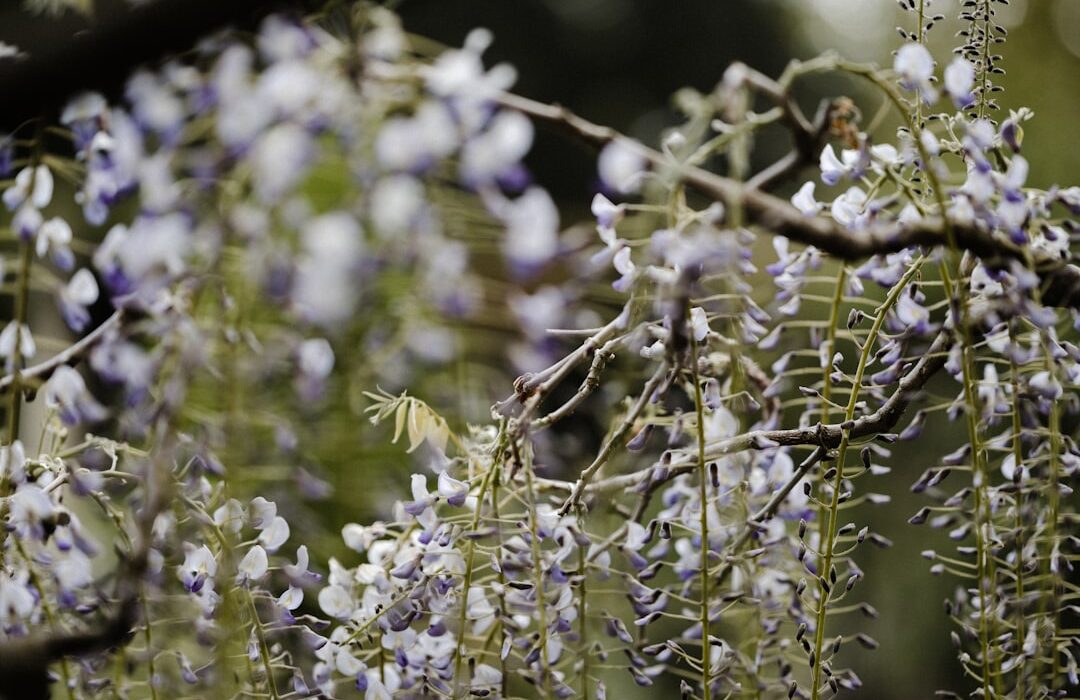
Wisteria’s cascading purple blooms are garden showstoppers — but this vigorous vine requires firm management to prevent it from taking over.
Choosing a Support Structure
Different vines climb in different ways — twining, tendrils, adhesive pads, or scrambling — and each needs appropriate support.
- Twining vines like wisteria need poles, arbors, or pergolas
- Tendril climbers like clematis wrap around thin supports like wire or netting
- Adhesive climbers like ivy cling to flat surfaces but can damage wood and mortar
- Scrambling vines like climbing roses need to be tied to their support
Planting and Training
Wisteria needs heavy-duty support. A flimsy trellis won’t survive — use pergolas, sturdy arbors, or reinforced structures rated for the vine’s mature weight.
Train new growth while it’s flexible. Once stems harden, they become difficult to redirect without breaking.
Maintenance and Pruning
Most vines need annual pruning to control size and encourage flowering. Without pruning, many vines become a tangled, unproductive mess.
Pro Tip: Take a photo of your vine’s support structure while it’s bare in winter. This helps you visualize where to direct new growth in spring.
Design Ideas
Vines add a vertical dimension to gardens that few other plants can match. Use them on arbors, pergolas, fences, walls, and even as ground cover.
Key Takeaway: Vines are living architecture. Choose the right vine for your structure and your patience level — some fill in within a season, others take years to reach maturity.
Frequently Asked Questions
What is the fastest growing vine for privacy?
Hyacinth bean vine, morning glory, and cypress vine are fast annual options. For perennials, Virginia creeper and trumpet vine grow quickly.
Will vines damage my house?
Adhesive climbers like ivy can damage siding and mortar. Use trellises mounted a few inches from walls for twining and tendril vines instead.
When should I prune my vines?
Prune spring-blooming vines right after flowering. Prune summer-blooming vines in late winter. Evergreen vines can be tidied in early spring.