

In This Article
Why Roses Need Companion Plants
Roses are magnets for aphids, Japanese beetles, blackspot fungus, and powdery mildew. Traditional rose care relies heavily on chemical sprays, but strategic companion planting provides natural pest and disease protection while creating a more beautiful, diverse garden. The best rose companions serve double duty as pest deterrents and visual complements.
Companion plants also improve soil around roses. Deep-rooted companions break up compacted subsoil, nitrogen-fixing plants enrich the soil, and ground covers act as living mulch that retains moisture and suppresses weeds. A well-planned rose bed with companions requires less maintenance than roses grown alone.
Key Takeaway: The most effective rose companions address roses’ three biggest challenges: aphid infestations, fungal disease, and Japanese beetles. Choose at least one companion for each threat.
Herbs That Protect Roses from Pests
Aromatic herbs planted at the base of rose bushes create a fragrant pest barrier. The strong scents confuse aphids and other pests that navigate by smell, making it harder for them to locate your roses among the competing aromas.
- Chives: The best aphid deterrent for roses — plant 6 inches from the base of each rose bush
- Lavender: Repels aphids and whiteflies while attracting pollinators — plant on the sunny side of roses
- Rosemary: Deters Japanese beetles and aphids — excellent in hot, sunny rose beds with good drainage
- Thyme: Low-growing ground cover that suppresses weeds and deters pests around rose bases
- Catmint (Nepeta): Vigorous, drought-tolerant border plant that repels aphids and complements rose colors
Pro Tip: Plant a continuous border of catmint around your rose bed rather than individual herb plants among the roses. The dense planting creates a stronger aromatic barrier and provides a stunning purple-blue complement to any rose color.
Flowers That Complement and Protect Roses
The right flower companions enhance the visual impact of roses while providing pest control benefits. Choose flowers that bloom at different times than your roses to extend the season of interest, or select colors that harmonize with your rose varieties.
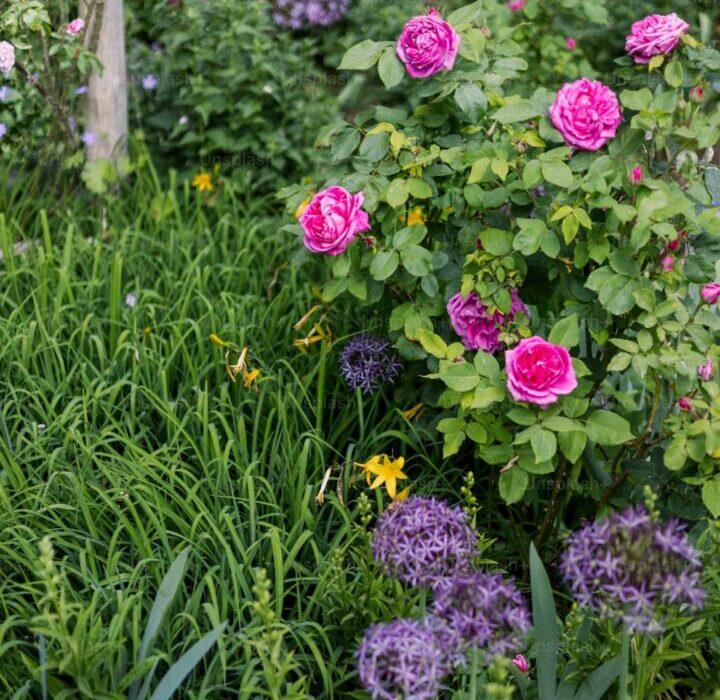
- Alliums (ornamental onions): Dramatic purple spheres that repel aphids and rose chafers — bloom before peak rose season
- Geraniums: Toxic to Japanese beetles — beetles eat the petals, become disoriented, and fall to the ground
- Marigolds: Repel aphids above ground and nematodes below — use as a low border around rose beds
- Foxgloves: Tall spires that attract bumblebees and provide vertical contrast behind rose bushes
- Salvia: Long-blooming companion that attracts pollinators and complements rose colors beautifully
Ground Covers and Low-Growing Companions
Ground cover companions serve the crucial role of living mulch around roses. They shade the soil surface, reducing water evaporation by 30 to 50 percent, suppressing weed germination, and preventing mud splash that spreads blackspot spores from soil to lower rose leaves.
- Sweet alyssum: Self-seeding annual ground cover that attracts hoverflies and parasitic wasps
- Creeping thyme: Fragrant, drought-tolerant ground cover that releases pest-deterrent oils when walked on
- Ajuga: Shade-tolerant ground cover for the north side of rose bushes where sun-loving herbs struggle
- Dianthus: Low mounding habit with spicy-scented flowers that deter aphids
Avoid ground covers that spread aggressively or create dense mats that trap moisture against rose stems. Good air circulation at the base of roses is essential for preventing fungal diseases. Leave a 4-inch clear zone around each rose stem.
Plants That Prevent Rose Diseases Naturally
Blackspot and powdery mildew are the two most common rose diseases, both caused by fungal pathogens. While no companion plant can cure these diseases, several plants improve air circulation, reduce humidity, and produce antifungal compounds that lower infection rates.
Garlic planted around roses produces allicin, a natural antifungal compound that may reduce blackspot severity. Some rosarians report significant improvement when garlic cloves are planted 6 inches from rose bases in early spring. The garlic grows, produces its antifungal compounds through the season, and is harvested in summer without disturbing the roses.
- Garlic: Natural antifungal properties may reduce blackspot and mildew — plant cloves in fall or early spring
- Chives: Allium family antifungal benefits similar to garlic in a more ornamental form
- Bee balm: Contains natural antifungal thymol — ironic since it is susceptible to mildew itself
- Tansy: Traditional companion for pest and disease control — use with caution as it spreads aggressively
Rose Companion Planting Design Ideas
A cottage-style rose garden interplants roses with lavender, catmint, foxgloves, and sweet alyssum for a relaxed, romantic look that also provides comprehensive pest protection. This style works beautifully in front yards and along walkways where formal rose-only beds can look stark.
For a formal rose garden, use low clipped hedges of lavender or boxwood as structural elements between rose bushes. Add allium bulbs that bloom in spring before roses take center stage, followed by salvia that fills gaps during mid-season. This layered approach ensures continuous bloom from April through October.
Pro Tip: Underplant climbing roses with a carpet of creeping thyme and sweet alyssum. These ground covers suppress weeds at the base of the climbing structure while providing fragrance and beneficial insect habitat at ground level.
Plants to Avoid Near Roses
Some plants compete with roses for water and nutrients or create conditions that worsen rose disease problems. Other plants host the same pests, concentrating infestations rather than dispersing them.
- Bunchgrass: Competes aggressively for water and harbors fungal spores near rose bases
- Morning glory: Aggressive vine that climbs and smothers rose bushes if not controlled
- Large trees: Root competition within 6 to 8 feet removes water and nutrients roses need
- Hibiscus: Attracts Japanese beetles in massive numbers, creating a beetle magnet near roses
- Other roses only: Rose monocultures concentrate pests and diseases — always add diverse companions
Frequently Asked Questions
What is the best companion plant for roses?
Chives are the single best companion for roses, providing proven aphid deterrence, antifungal benefits from allium compounds, and an attractive border that complements any rose color. Plant them 6 inches from the base of each rose bush.
Do marigolds help roses?
Yes, marigolds help roses by repelling aphids above ground and suppressing nematodes below ground. French marigolds are the most effective variety. Plant them as a continuous border around rose beds rather than sporadically among the bushes.
Can lavender grow next to roses?
Lavender and roses make excellent companions if both receive full sun and well-drained soil. Lavender repels aphids and attracts pollinators. Plant lavender on the sunnier side of rose bushes, and ensure both plants have adequate spacing for air circulation.